
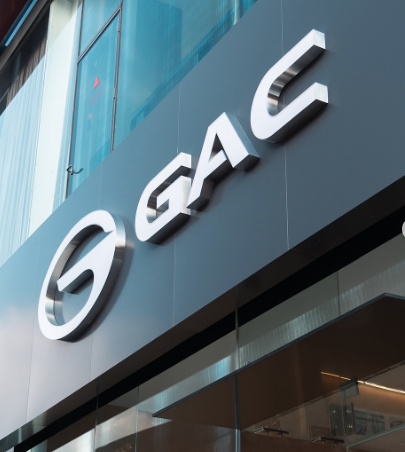
Guangzhou Automobile Group (GAC) has signed a letter of intent with rival state-owned automaker FAW Group to acquire part of FAW’s stake in a joint venture with Toyota, in a deal that would make FAW one of GAC’s largest shareholders. The move is widely believed to be the first concrete step toward merging China’s two separate Toyota joint ventures into one.
What was announced
GAC confirmed on 14 September 2026 that it had signed a letter of intent with China FAW Corporation regarding a potential major asset restructuring. GAC said it plans to issue shares to acquire part of FAW’s stake in an unnamed vehicle manufacturing joint venture while raising supporting funds.
GAC has not officially named the target joint venture, saying it withheld the name because the target involves an overseas-listed company and would disclose it in a subsequent restructuring proposal. State-owned Economic Daily, however, reported the undisclosed joint venture was FAW Toyota, citing sources.
Not a full 50% handover
This is not GAC simply buying FAW’s entire 50% stake in FAW Toyota outright. According to a report in financial magazine Caijing, GAC will not acquire all of FAW’s equity in FAW Toyota. One industry analyst estimates GAC could buy roughly 25% of FAW Toyota for about 20 billion yuan, which would require issuing more than 4 billion new shares.
The likely end structure appears more complex than a simple stake transfer. Reports suggest that under the proposed arrangement, strongly favoured by Toyota’s Japanese side, Toyota would hold 50% in a merged Toyota sales company in China, with FAW and GAC each holding 25%, and dealer networks fully integrated so the new company could sell and service all Toyota models nationwide.
What happens to GAC’s ownership
If completed, FAW is expected to become GAC’s second-largest shareholder with strategic influence. GAC has said the transaction would neither change its ultimate controller nor amount to a backdoor listing.
GAC’s Shanghai-listed shares were halted from trading starting 14 September, with the suspension expected to last no more than 10 trading days. The stock initially surged as much as 16% the day after the announcement, before easing back to close up a more modest 2.6% on the day.
Why now: two struggling joint ventures
Both companies’ existing Toyota partnerships have been under pressure. GAC’s joint venture with Toyota, established in Guangzhou in 2004, saw sales plunge 24% to 375,000 units in the first eight months of 2026. FAW’s Toyota joint venture, headquartered in Tianjin and established in 2000, saw sales fall 13% to 379,000 vehicles year-to-date. Both rely heavily on the domestic Chinese market.
The move is understood to be part of Toyota’s broader effort to consolidate and streamline its struggling China operations and improve efficiency, as competition from domestic automakers keeps intensifying.
Part of a bigger consolidation push
The timing lines up closely with new government policy. Just days before the announcement, Chinese government departments published a five-year plan for developing the smart, connected new-energy-vehicle industry, explicitly calling for mergers, acquisitions and cross-regional integration.
Beijing has been pushing large state-owned auto groups to integrate resources and eliminate duplication, as they face intensifying competition from fast-expanding domestic new-energy-vehicle manufacturers.
FAW carries significant weight in this story. It is one of China’s oldest automakers, previously known as First Auto Works, and the largest automaker in northern China, headquartered in Changchun. Along with Dongfeng Motor and Changan Auto, it is a first-tier state-owned enterprise directly overseen by China’s state asset regulator, unlike GAC, which is locally administered. FAW’s own brands include Hongqi and Jiefang, and it also runs a joint venture with Volkswagen.
What it could mean going forward
Analysts describe the move as an equity investment rather than a full merger, following a cautious, staged approach rather than the sweeping combination some initially expected. Part of the logic also appears technical: FAW Toyota’s models, built on global platforms, have struggled to keep pace with local demand for smart cockpit and driver-assistance features, unlike GAC’s more developed local research base.
The regional angle
This remains, for now, a domestic Chinese restructuring story, with no changes announced to Toyota, GAC or FAW’s operations in the UAE. But for a region where Chinese state-linked automakers and their joint-venture partners are increasingly visible, a more consolidated, better-resourced Toyota operation in China could eventually influence export strategy, model availability and long-term supply stability for vehicles sold internationally.
Sources: GAC Group exchange filings; Reuters; Economic Daily; South China Morning Post; CnEVPost; Gasgoo; The Bamboo Works. Reporting as of September 2026.